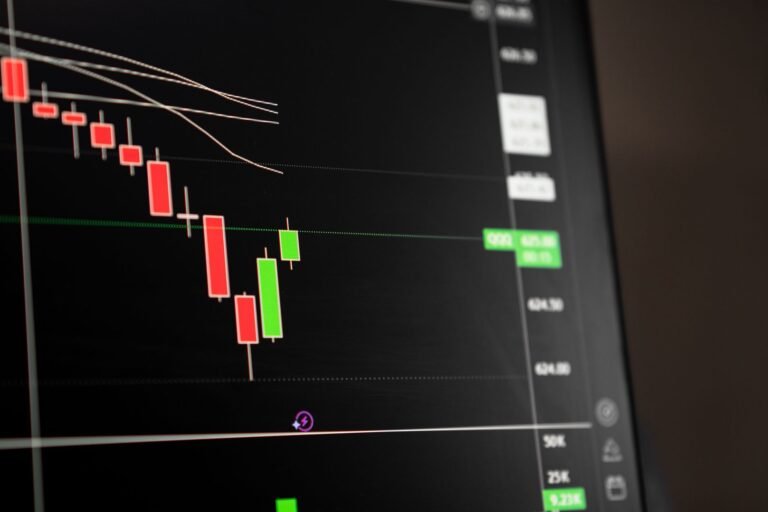




Gold just suffered its worst week since March — and the metal’s problem is not really about gold. Spot gold fell about 9% last week to roughly $3,538 an ounce, its lowest weekly close since September 2025, after five straight down days. The sell-off was driven by a sharp repricing of Federal Reserve policy: traders now treat a December rate hike as near-certain, the dollar is at a 19-month high, and investors sold whatever they could to cover losses elsewhere.
The week in numbers
Gold did not drift lower. It broke through one round number after another — $3,900, $3,800, $3,700 and $3,600 in the space of five sessions.
| Day | Spot gold ($/oz) | Daily move | What happened |
|---|---|---|---|
| Mon, Nov 16 | ~3,876 | — | Opened near the prior week’s close; briefly traded above $3,900 |
| Tue, Nov 17 | 3,846 | -0.8% | Drifted lower as Fed hike bets kept building |
| Wed, Nov 18 | 3,725 | -3.1% | Broke below $3,800 after New York Fed President Williams signalled rates may need to rise again |
| Thu, Nov 19 | 3,625.50 | -2.7% | Broke below $3,700; the October FOMC minutes showed almost all officials expect further hikes |
| Fri, Nov 20 | 3,538 | -2.4% | Intraday low of about $3,503, the lowest since September 2025 |
From the previous Friday’s close near $3,876 to Friday’s $3,538, gold lost about $338 an ounce — roughly 9% in a week. December gold futures settled at $3,515.40 on Friday, down 4.6%. Silver fared worse, falling more than 15% on the week to below $42 an ounce.
For scale, gold is now roughly 37% below its January peak near $5,600 — more than a third of its value gone in under eleven months, almost all of it in a single week.
A Fed repricing, not a gold problem
Nothing about gold itself changed last week. What changed was the market’s view of the Fed.
The turn began on Wednesday, when Governor Christopher Waller told CNBC that a half-point December hike is “probably needed”. The October FOMC minutes, published the same day, showed almost all officials expect further hikes. Philadelphia Fed President Anna Paulson flagged inflation risks that could warrant another increase, and New York Fed President John Williams indicated rates might need to rise again.
The CME FedWatch Tool put the odds of a 25-basis-point hike at the December 8–9 meeting at about 92% by Friday, with the chance of a larger half-point move fading as bonds rallied late in the week. The odds of two or more hikes by next June topped 80%. That is a very different Fed from the one markets priced a month ago — and it is the Fed gold is now trading against.
The mechanics are straightforward: higher rates raise the opportunity cost of holding an asset that pays no yield, which is exactly what gold is. A dollar at a 19-month high makes gold more expensive for buyers in other currencies. And the 10-year Treasury yield, which closed near 5.05% on Thursday, now offers a real return that gold cannot match. The October data gave the hawks their evidence: CPI rose 0.4% on the month, core CPI 0.3%, and employers added 165,000 jobs — all hotter than expected, as covered in our October CPI result and FOMC minutes analysis. For the mechanics of how the Fed sets rates, see our complete guide to the Fed’s rate decisions.
When a haven becomes a funding source
The second force behind gold’s fall had nothing to do with monetary policy. Stocks were collapsing at the same time, and gold became the asset investors sold to raise cash.
The Nasdaq Composite lost 10% on the week — its worst since March 2020 — and fell 5.3% on Friday alone to 22,617.73, erasing its gains for the year. The S&P 500 fell 3.7% on Friday to 6,910.39, its seventh straight down day, the longest since February 2020. The Dow dropped 1.9% to 48,147.33, Nvidia sank 14%, the VIX hit its highest level of 2026, and 71 of the 101 Nasdaq-100 stocks were in bear-market territory.
In that kind of rout, gold stops behaving like a haven and starts behaving like a funding source. ING commodities strategist Ewa Manthey pointed to forced selling as investors raised cash to cover stock-market losses, and the pattern was visible all week: the worse equities got, the harder gold fell. The selling was about liquidity, not gold’s fundamentals.
| Asset | Weekly change | Note |
|---|---|---|
| Gold (spot) | -8.9% | Worst week since March; 14-month low |
| Silver (spot) | -15%+ | Fell below $42/oz |
| Nasdaq Composite | -10.0% | Worst week since March 2020 |
| S&P 500 | -8.6% | Seven straight down days |
| Dow Jones | -8.0% | Worst week since the COVID era |
The case for a bounce — and its limits
The selling looks overdone on several measures. Gold’s daily RSI sits near 25, deep in oversold territory. Physical demand in India and China strengthened as prices fell. Goldman Sachs, which has cut its gold forecasts twice this month, still sees $4,150 by the end of 2026 and $4,650 by the end of 2027. And in early Asian trading on Monday, gold bounced about 1% to roughly $3,577, with US equity futures also pointing higher.
But the limits on any bounce are clear. The first resistance is $3,600 — the level gold lost on Friday — and reclaiming it would take more than a technical bounce. The Fed story has not changed: a December hike is still near-certain, and the market is pricing more hikes after that. As long as that conviction holds, rallies in gold are likely to be sold. The line that matters most is $3,500: a daily close below it would confirm the breakdown, while holding it keeps the door open for the oversold bounce to build.
What to watch next
This is a holiday-shortened week with a front-loaded data calendar. On Monday, the S&P Global flash PMIs land, and New York Fed President Williams speaks at 4 p.m. ET — the only scheduled Fed speaker of the week.
Wednesday is the big day. The October PCE price index — the Fed’s preferred inflation gauge — is released at 8:30 a.m. ET, alongside the second estimate of third-quarter GDP, durable goods orders and weekly jobless claims, brought forward for Thanksgiving. Economists expect core PCE to rise 0.3% on the month and 3.2% on the year, up from 3.1%. A hotter reading would harden the case for December and beyond, and gold would likely test $3,500 again; a softer one would give the metal its first real reason to rally in a month. The Fed’s Beige Book follows that afternoon.
US markets are closed Thursday for Thanksgiving and shut early Friday, so liquidity will be thin — and thin markets can exaggerate moves in both directions. After that, the calendar points straight at the December 8–9 FOMC meeting, with November CPI not due until December 10, after the Fed has already decided.
Gold’s week says less about gold than about the market’s new conviction that the Fed is not done hiking. Until Wednesday’s PCE gives traders a reason to doubt that conviction, the metal’s worst week since March is a warning, not a bottom.